GUIDES
Japandi interior design: a complete guide
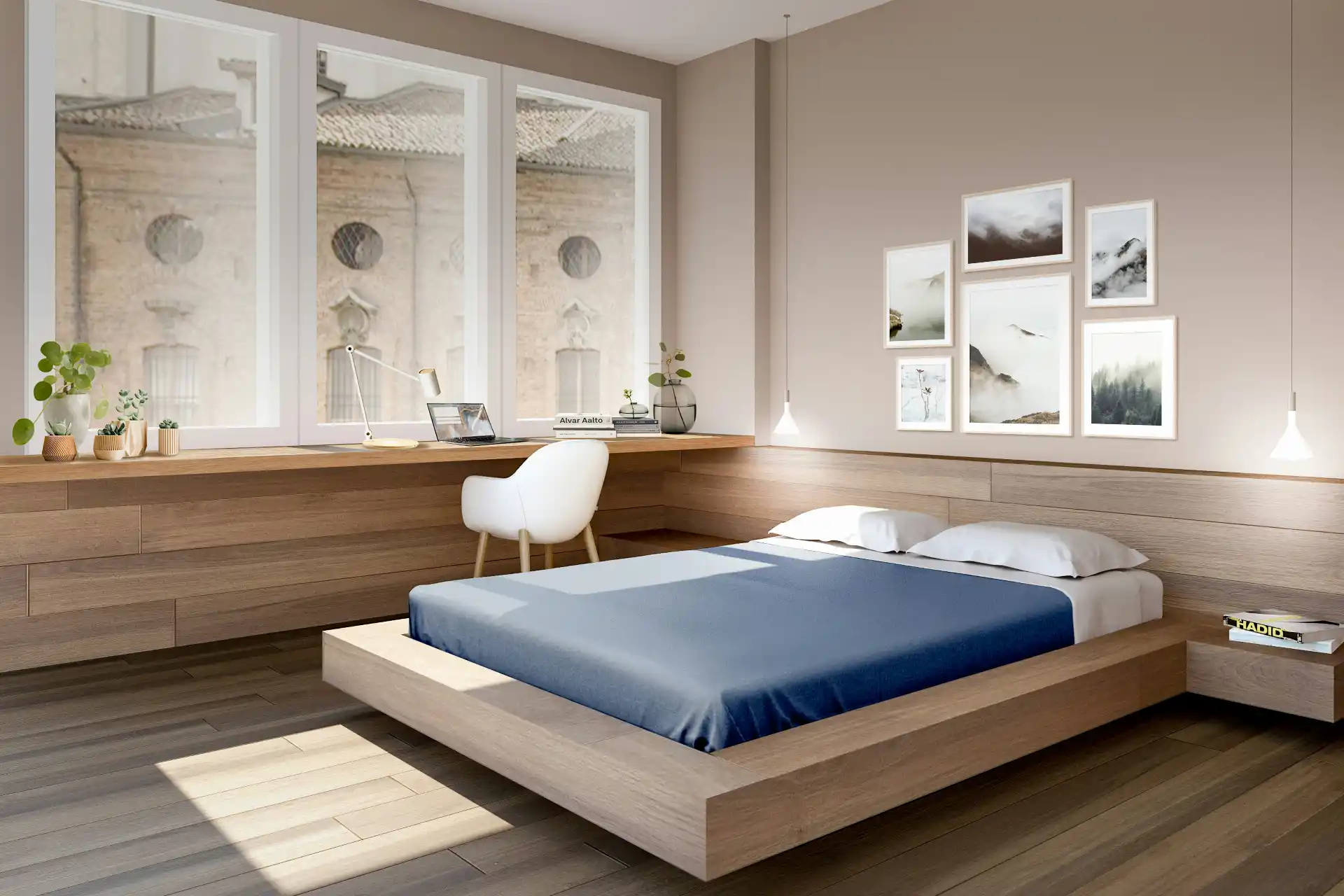
What Japandi is, the palette and materials behind it, how to apply it room by room, and the mistakes that make it feel cold instead of calm.
Japandi is a blend of Japanese and Scandinavian design: low, simple furniture, natural timber, a muted palette and very few objects, each chosen with care. It aims for a home that feels calm and warm at the same time, with nothing on show that does not earn its place.
The style has lasted longer than most trends because it is less about a look than a way of editing a home. This guide explains where it comes from, the principles that hold it together, and how to use it in a real living room, bedroom and kitchen.
At a glance: Japandi = Scandinavian comfort + Japanese restraint; warm neutrals, two wood tones, natural fibres, low furniture and fewer, better objects.
Where Japandi comes from
Japanese and Scandinavian design developed far apart but arrived at similar answers. Both value craft, natural materials and a close relationship with the landscape outside the window. Both distrust ornament for its own sake.
From Japan comes wabi-sabi, the idea that beauty lives in things that are simple, imperfect and marked by time: a hand-thrown bowl, a timber beam that has darkened, a linen cloth softened by washing. From Scandinavia comes the emphasis on comfort and daylight in long winters, often summed up as hygge, and the practical sense of having just enough, which Swedes call lagom.
Put together, the Japanese side keeps a room disciplined and the Scandinavian side keeps it cosy. Without either half, the style tips into something else: a bare gallery or a cluttered cabin.
The five ideas behind the style
Restraint over abundance
Every surface does not need something on it. A Japandi room leaves space around objects so each one can be seen. A single branch in a vase or one ceramic piece on a sideboard says more than a crowded shelf.
Low, grounded furniture
Seating, beds and tables sit closer to the floor than in most Western rooms. Low pieces keep sightlines open across a room and give it a relaxed, settled feel. Platform beds, low sofas with wide arms and coffee tables with thick timber tops are typical.
Wood in two tones
Scandinavian interiors lean on pale oak, ash and birch. Japanese interiors often use darker timbers, from walnut to charred cedar. Japandi pairs the two: pale floors with a dark timber table, or light joinery with a walnut accent. The contrast stops a neutral room from looking flat.
Texture before pattern
Instead of busy prints, interest comes from the weave of linen, the grain of timber, the matt surface of limewash or clay plaster, the irregular glaze of stoneware. Pattern, where it appears, is quiet and geometric.
Imperfection on purpose
Handmade objects, visible joints and natural variation are welcomed. A slightly uneven tile or a knot in an oak board is part of the character, not a flaw to hide.
A Japandi colour palette that stays warm
The base is a family of warm neutrals: off-white with a touch of cream or grey, oatmeal, greige and soft sand. Mid tones come from clay, mushroom, muted sage and stone. Deep accents are charcoal, ink black and the brown of dark timber.
Avoid stark, blue-tinged whites and cool greys on large surfaces; under daylight they can make the room feel clinical. Black works best in thin lines: a picture frame, a pendant cord, a slim metal leg, a window frame.
If you want colour, keep it muted and natural, such as a dusty olive cushion or an indigo-dyed throw. For a method to build the whole scheme, see how to choose a colour palette for your home.
Japandi room by room
The Japandi living room
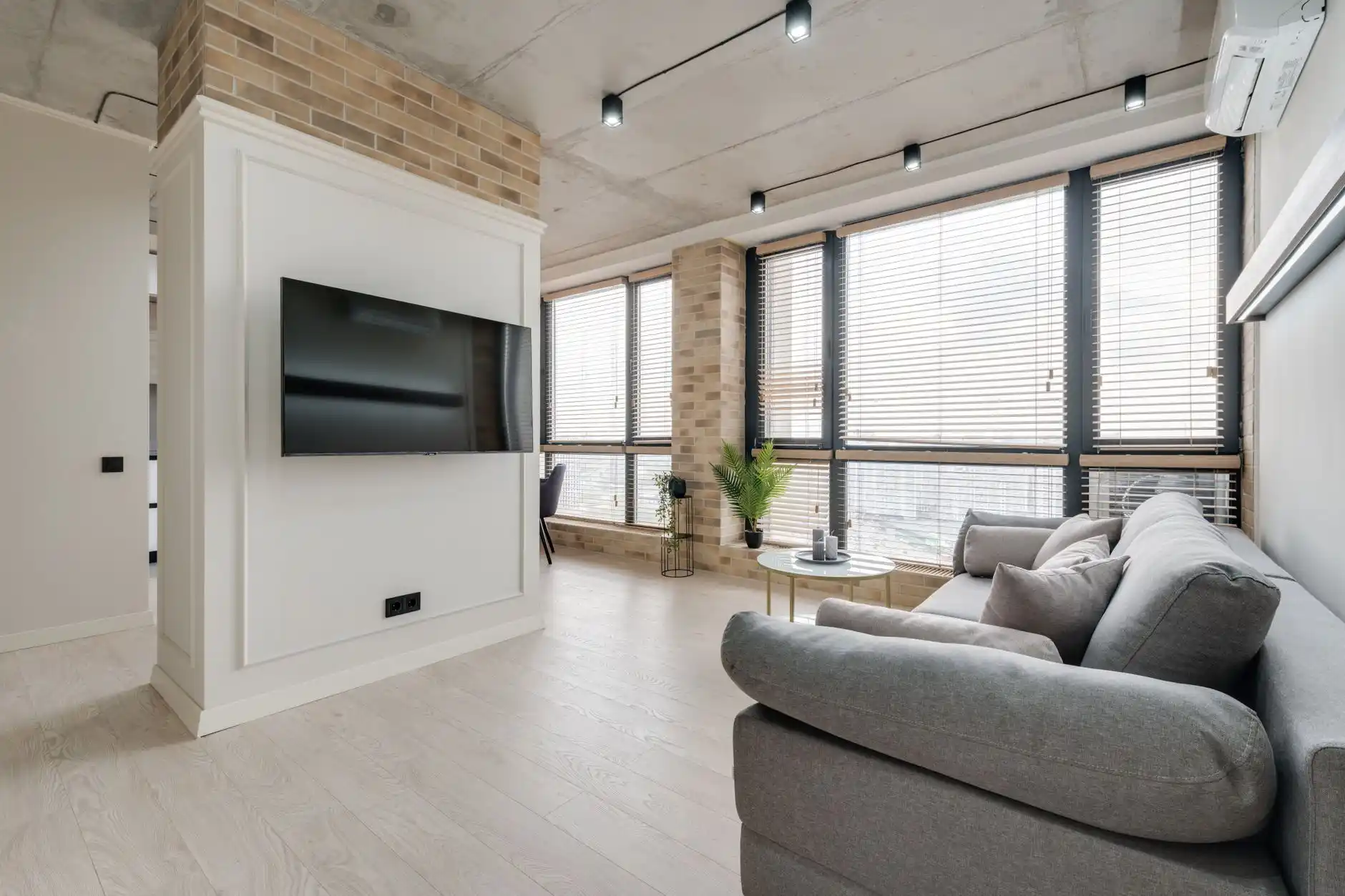
Start with a low sofa in linen, bouclé or wool, in a warm neutral. Add a solid timber coffee table with rounded edges and a rug in jute, wool or a flatweave. Keep the storage closed: long, low sideboards hide clutter and give the eye a calm horizontal line.
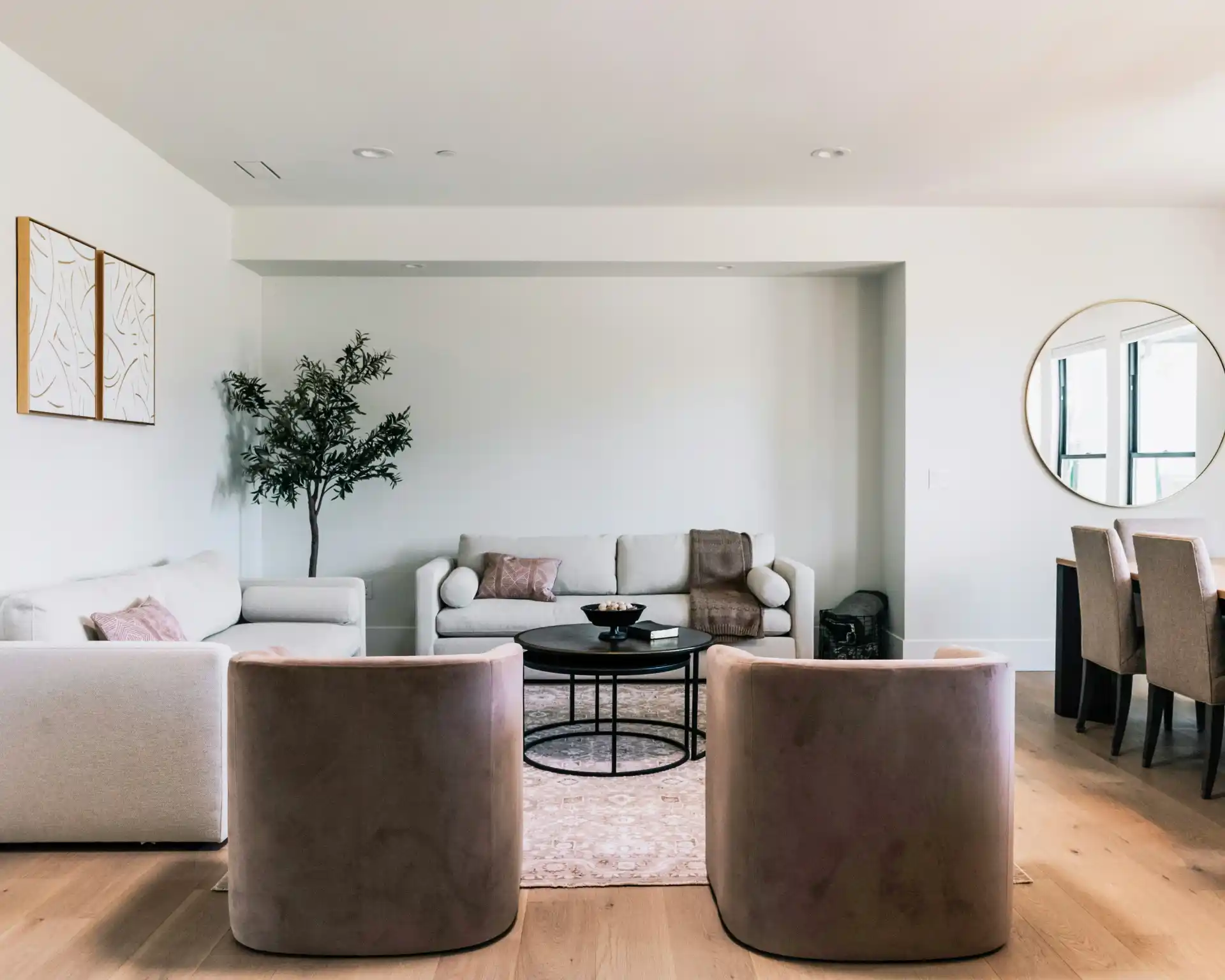
Lighting matters as much as furniture. Paper lanterns and fabric shades soften light at night, which suits the style far better than bright spotlights alone. The warm timber and soft seating in Warm geometry show how a living space can be simple and still inviting.
A Japandi bedroom for rest
A low platform bed in oak or walnut is the anchor. Dress it in washed linen in two or three related tones, and keep bedside tables small and uncluttered. A wardrobe with flush, handleless doors keeps the wall quiet. Blackout blinds behind sheer curtains give darkness at night and soft daylight in the morning.
Kitchen and dining, the quiet way
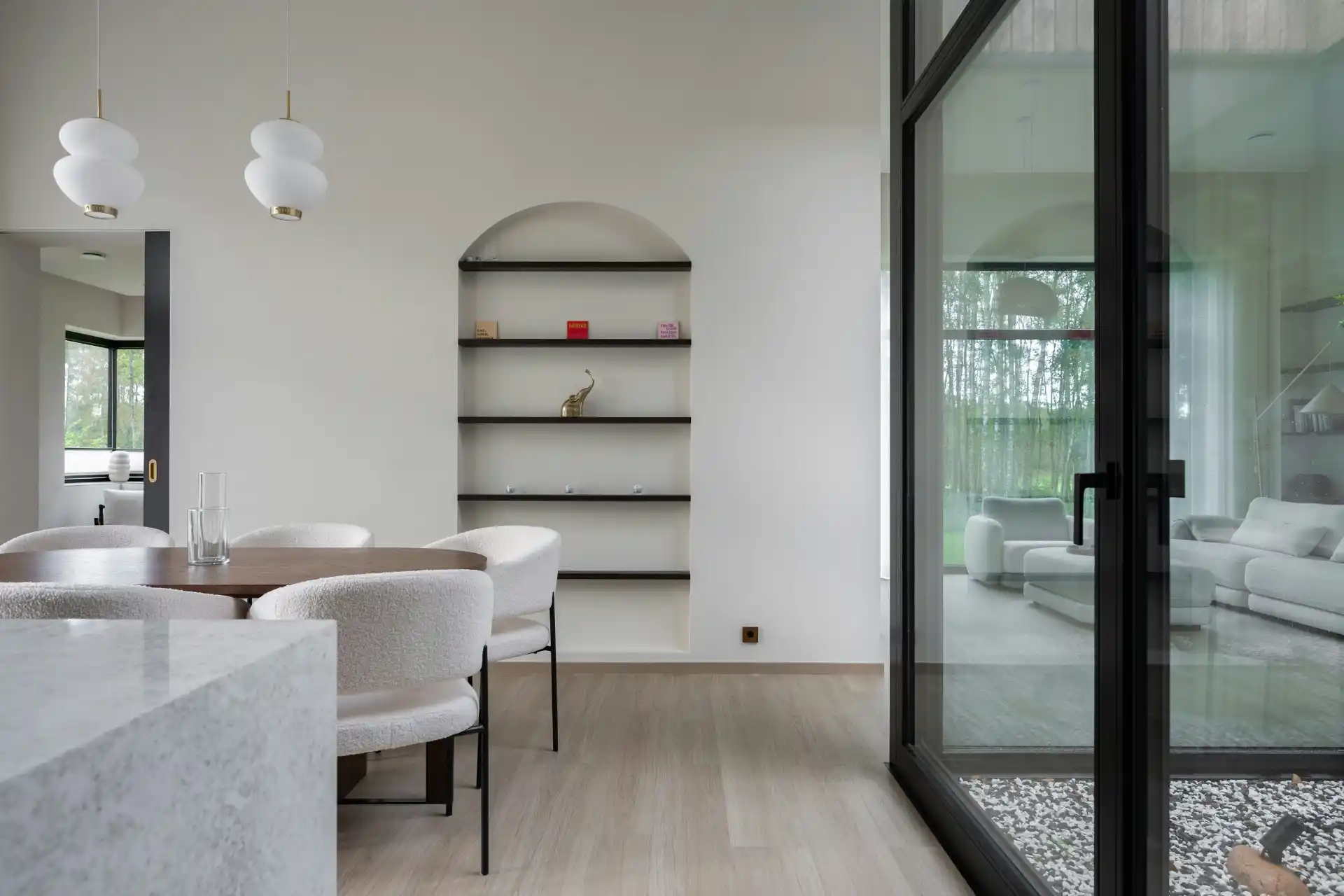
Flat-front cabinets in timber veneer or a matt paint finish, a stone or microcement worktop and as few items on the counter as possible. Open shelving, if used, should hold a small, deliberate set of everyday ceramics and glassware. At the table, a solid timber top with simple chairs, perhaps with woven seats, does most of the work.
Japandi, minimalism and Scandinavian style: how they differ
Minimalism reduces a room to the essentials, but it can be cool, hard-edged and indifferent to warmth. Scandinavian style is warmer and more relaxed, though it often uses more white, lighter woods and a busier mix of textiles and accessories.
Japandi sits between the two. It keeps minimalism's discipline and Scandinavian comfort, then adds darker timbers, earthier colours and the Japanese respect for handmade, imperfect things. If a room feels too sterile, it is drifting towards minimalism; if it feels too busy, it has moved back towards Scandinavian.
Mistakes that make Japandi feel cold
Using one wood tone everywhere is the most common. A room of matching pale oak can look like a showroom; one darker element brings depth.
Removing too much is the second. Calm is not the same as empty. Rugs, cushions, curtains and plants are what make a pared-back room comfortable to live in.
The third is buying the look in one go. Japandi rooms tend to be collected slowly, with a few good pieces that last. Mass-produced decor labelled with the style rarely carries the texture and character that make it work.
Finally, poor lighting undoes everything. A single bright ceiling light flattens the textures the style depends on. Warm, low and layered light keeps them visible after dark.
Bringing Japandi home without starting over
You do not need to replace every piece of furniture. Begin by editing: clear surfaces, close storage and decide which objects truly matter. Then swap synthetic textiles for linen and wool, add one darker timber element and change harsh bulbs for warm ones.
If you are planning a larger change, such as new joinery, flooring or a kitchen, the style is easier to achieve when materials and layout are chosen together from the start. Browse the finished interiors for the feeling you want, then tell us about your home.
FAQ
What is Japandi style in simple terms?
Japandi is a hybrid of Japanese and Scandinavian interior design. It combines low, simple furniture, natural materials such as timber, linen and stone, a muted warm palette and very few decorative objects. The goal is a home that feels calm and uncluttered but still cosy enough to live in every day.
What colours are used in a Japandi interior?
Warm off-whites, oatmeal, greige and sand form the base. Clay, mushroom, stone and muted sage add depth, and charcoal or black appears in small doses such as frames and light fittings. Saturated brights and cool, blue-tinged whites are generally avoided because they break the calm, natural mood.
What is the difference between Japandi and Scandinavian design?
Scandinavian design is lighter and often whiter, with pale woods and a relaxed mix of textiles. Japandi keeps that comfort but adds Japanese restraint, darker timbers, earthier colours, lower furniture and an appreciation of handmade, imperfect objects. The result is calmer and slightly more grounded than a typical Scandinavian room.
Is Japandi style still popular?
Yes. Because Japandi rests on lasting principles rather than a specific product or colour, it has remained popular for years. Its emphasis on natural materials, warm neutrals and fewer, better objects also fits the wider shift towards calmer, more personal and longer-lasting interiors.
How do I make my bedroom Japandi?
Choose a low timber bed, washed linen bedding in two or three related neutrals, small bedside tables and closed storage with plain fronts. Keep surfaces nearly clear, use soft warm lighting such as a paper or fabric lamp, and add one natural accent, such as a ceramic vase or a plant.