GUIDES
How to choose a colour palette for your home

Start with light and materials, not with paint swatches. A method you can follow room by room.
1. Read the light
North-facing rooms are cool and need warmer tones; south-facing rooms can handle cooler colours. Observe each room at morning, noon and evening.
2. Begin with what is fixed
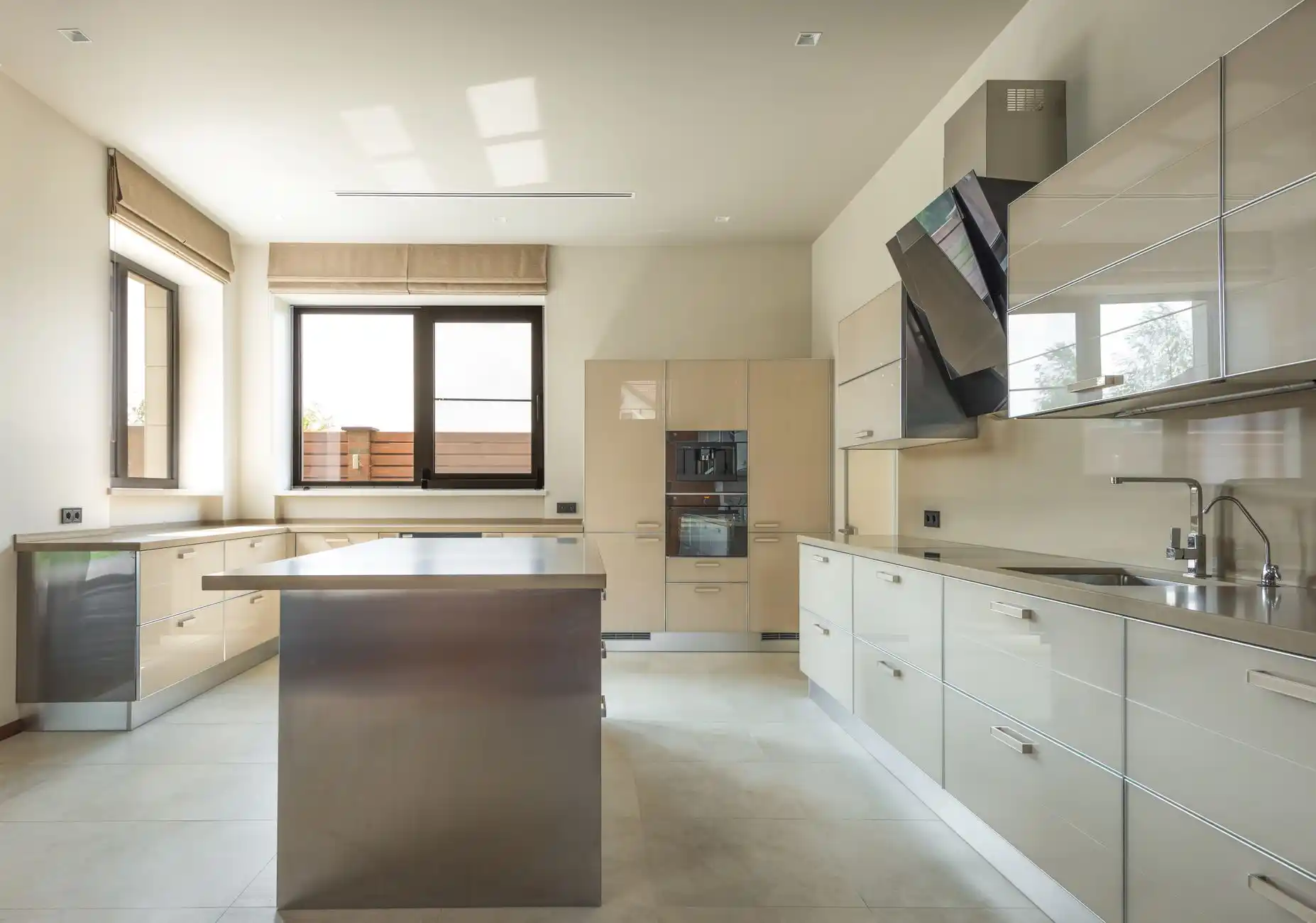
Floors, worktops, stone and large furniture are your starting palette. Choose wall colours that sit comfortably with them.
3. Limit the palette
Pick one main neutral, one or two supporting tones and one accent. Repeat them through the home so rooms connect.
4. Vary the tone, not the hue
Use lighter and darker versions of the same colours for depth. Texture — linen, wool, timber — does much of the work that colour would otherwise have to.
5. Test large samples
Paint large sample boards and move them around the room through the day. Small swatches mislead.
6. Treat accents as temporary
Put bold colour in things that are easy to change: cushions, art, a vase. See the warm, restrained approach in Air & timber.
More on materials: natural materials for a calm home.