GUIDES
How to choose the right rug size for every room

Standard rug sizes in feet and centimetres, plus exactly how big a rug should be for a living room, a queen or king bed, a dining table and a hallway.
The right rug is almost always bigger than people expect. In a living room, at least the front legs of every seat should rest on it; under a dining table, it should extend about 60 cm (24 in) beyond each edge; under a bed, it should show 45 to 60 cm (18 to 24 in) on each side. Leave a border of bare floor around the rug, usually 30 to 45 cm (12 to 18 in).
An undersized rug is among the most common reasons a room looks unfinished. It makes furniture seem to float and the floor look broken into pieces. Below are the standard sizes, then the rules for each room, and a quick way to test a size before ordering.
At a glance: living room = front legs on; dining = table plus 60 cm each side; bedroom = 45–60 cm beyond the bed; 30–45 cm of bare floor at the edges.
Standard rug sizes in feet and centimetres
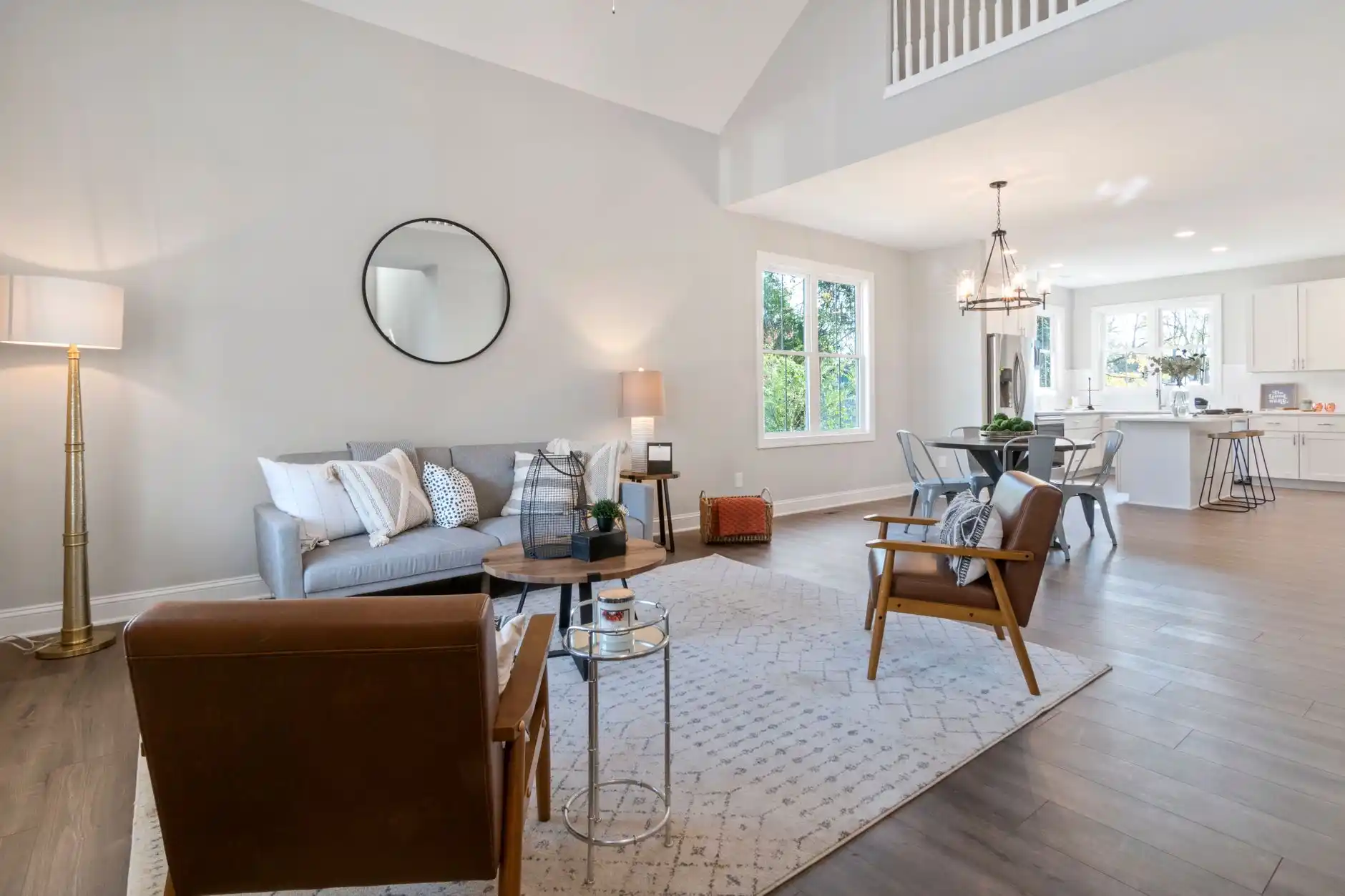
Imperial and metric sizes are close but not identical, so always check the exact dimensions when ordering. The most common rectangular sizes are 5 x 8 ft (about 150 x 240 cm, often sold as 160 x 230 cm), 6 x 9 ft (about 180 x 270 cm), 8 x 10 ft (about 240 x 300 cm), 9 x 12 ft (about 270 x 365 cm) and 10 x 14 ft (about 300 x 425 cm).
Runners are usually 60 to 90 cm (2 to 3 ft) wide and 180 to 365 cm (6 to 12 ft) long. Round rugs come in diameters from about 120 cm (4 ft) to 300 cm (10 ft) and more.
In most living rooms, 8 x 10 ft or larger is the size that works. 5 x 8 ft suits small living rooms, studies and bedrooms with the rug at the foot of the bed.
Sizing a rug for the living room
There are three standard ways to place a living room rug. Which one suits you depends on the room and the furniture.
All legs on the rug
Every piece in the seating group, including the sofa and chairs, sits fully on the rug. This is the most generous and pulled-together look, best for large rooms and open-plan spaces where the rug defines the living zone. It usually needs a 9 x 12 ft rug or bigger.
Front legs on the rug
The front legs of the sofa and chairs rest on the rug and the back legs stand on the floor. This is the most common choice, because it connects the seating while using a more affordable size, often 8 x 10 ft. Make sure the rug extends at least 15 to 20 cm (6 to 8 in) under the front of each piece so it looks intentional.
Only the coffee table on the rug
A small rug under the coffee table alone rarely works; it tends to look like a doormat in the middle of the room. It can suit a very small space or a deliberately layered look, but in most cases the rule is simple: go bigger.
Whichever option you choose, the rug should be wider than the sofa, ideally by 15 to 30 cm (6 to 12 in) on each end. For help with the furniture itself, see how to arrange living room furniture.
Dining room rugs: allow for the chairs
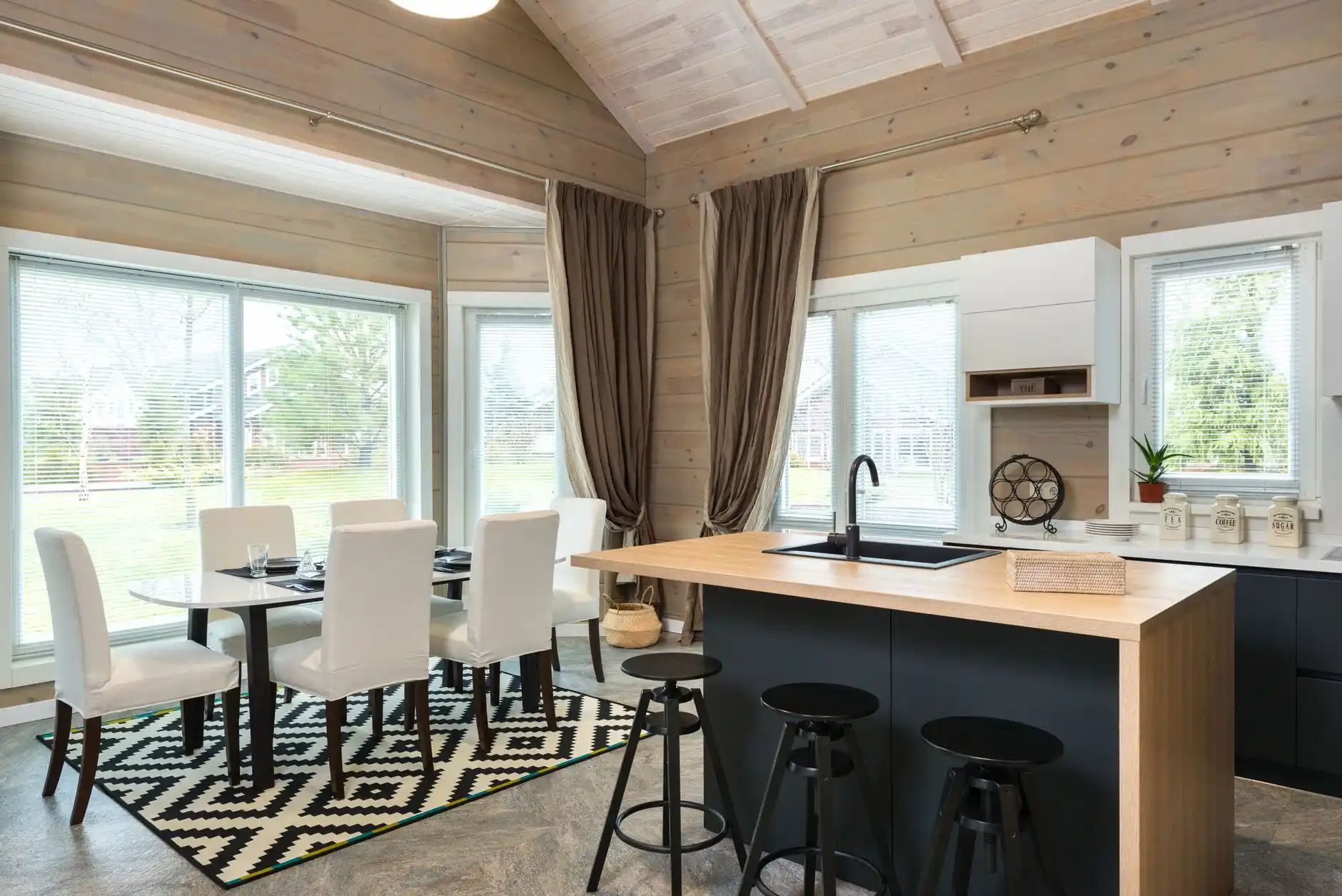
The rug under a dining table must be large enough that chairs stay on it when pulled out. Measure the table and add about 60 cm (24 in) on every side, or 75 cm (30 in) for a more comfortable margin.
For example, a six-seat table of 90 x 180 cm (36 x 72 in) needs a rug of at least 210 x 300 cm, so an 8 x 10 ft rug is the minimum and 9 x 12 ft is better. Round tables look best on round rugs, sized with the same 60 cm margin.
Choose a flatweave or low pile under a dining table. Chairs slide more easily, and crumbs are easier to clean.
Bedroom rugs by bed size
The aim is soft floor under your feet when you get out of bed. Place the rug under the lower two-thirds of the bed so it starts just in front of the bedside tables, and let it extend 45 to 60 cm (18 to 24 in) beyond the sides and foot of the bed.
For a double or queen bed (about 150 x 200 cm, 60 x 80 in), an 8 x 10 ft rug placed horizontally works well. For a king bed (about 180 to 195 cm wide, 76 in in the US), a 9 x 12 ft rug is the usual choice.
An alternative for smaller rooms is a pair of runners, one on each side of the bed, or a single 5 x 8 ft rug placed at the foot of the bed where it extends beyond the sides.
Hallways, kitchens and runners
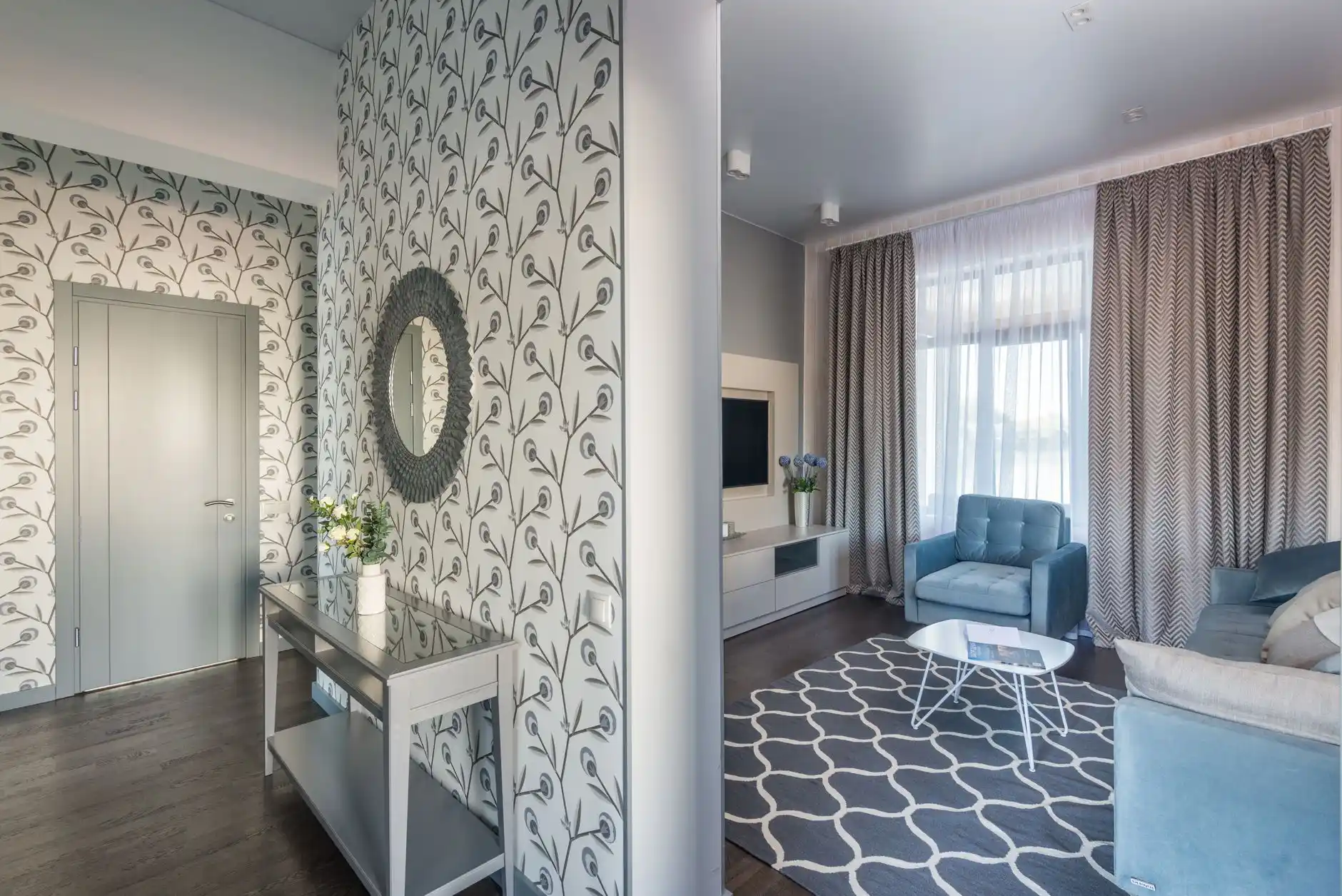
In a hallway, a runner should leave 10 to 15 cm (4 to 6 in) of floor on each side and end 15 to 30 cm (6 to 12 in) short of each end of the corridor. Measure door swings carefully so doors clear the rug.
In a kitchen, a runner along the main work run softens the floor where you stand longest. Choose a flatweave that can be washed or a material that tolerates spills, and use a non-slip underlay.
Shape, layering and pile
Match the rug shape to the furniture arrangement. Rectangular rooms and rectangular seating groups suit rectangular rugs; round tables and curved sofas suit round ones.
Layering a smaller patterned or textured rug over a large plain one is a good way to add interest when the perfect rug in the right size is out of budget. Jute or sisal makes a good base; wool, a vintage piece or a hide works on top.
Pile affects both comfort and practicality. High pile feels luxurious in bedrooms but traps dirt in busy areas. Flatweaves and low pile suit dining rooms, hallways and homes with pets. Natural materials such as wool and jute also age well, as explained in natural materials for a calm home.
Testing a size with tape before you order
Before buying, mark the outline of the rug on the floor with painter's tape and live with it for a day or two. Check how the furniture legs fall, whether doors open freely, and how much floor shows around the edges. A rug that looks large in a showroom often looks modest at home.
Also allow for the underlay, which should be slightly smaller than the rug, and for the rug's edge thickness near doors.
Choosing rugs as part of the whole room
A rug ties together the floor, furniture and colour of a room, which is why it is easier to choose alongside the rest of the scheme than on its own. Look at how rugs anchor the living areas in Air & timber, then ask us about your space.
FAQ
What size rug should go under a sofa?
For most living rooms, an 8 x 10 ft rug lets the front legs of the sofa and chairs rest on it. The rug should be wider than the sofa by 15 to 30 cm on each end. In larger or open-plan rooms, 9 x 12 ft or bigger allows all furniture legs to sit on the rug.
What size rug do I need for a queen bed?
An 8 x 10 ft rug placed horizontally under the lower two-thirds of a queen bed is the standard choice. It extends roughly 45 to 60 cm beyond each side, giving soft floor underfoot when you get up. In a small room, two runners along the sides are a good alternative.
How much floor should show around a rug?
In most rooms, leave about 30 to 45 cm (12 to 18 in) of bare floor between the edge of the rug and the walls. In small rooms, 20 cm (8 in) is enough. Too little border makes the rug look like wall-to-wall carpet that does not fit; too much makes it look undersized.
Is it better to have a rug too big or too small?
Too big is almost always better than too small, as long as some floor shows around the edges. An undersized rug makes furniture look disconnected and the room feel fragmented, while a generous rug pulls a seating group together and makes the room feel more considered.
How big should a rug be under a dining table?
Add about 60 cm (24 in) to every side of the table so chairs stay on the rug when pulled out. For a typical six-seat table of 90 x 180 cm, that means a rug of at least 210 x 300 cm, usually an 8 x 10 ft or 9 x 12 ft rug.