GUIDES
Small bathroom design ideas that feel bigger
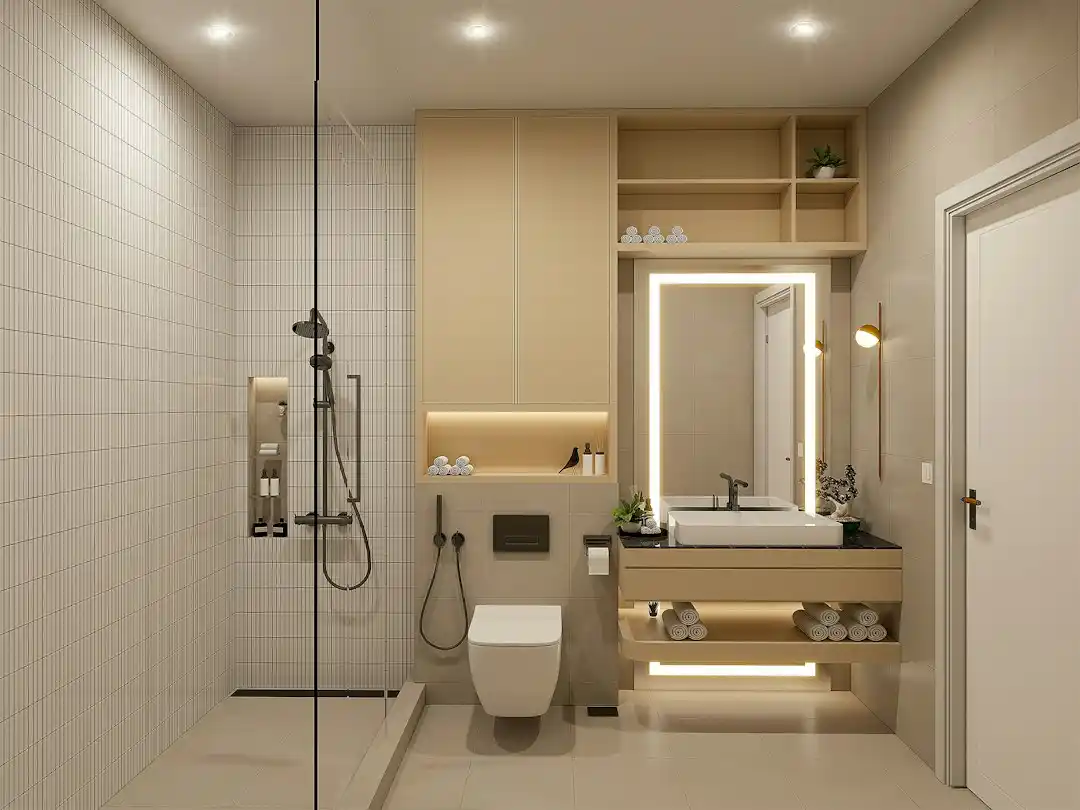
Small bathroom ideas that work: space standards, wall-hung fittings, curbless showers, recessed storage, large tiles, mirrors and the mistakes to avoid.
A small bathroom feels larger when the floor is visible from wall to wall, the shower has no curb or bulky enclosure, fittings are mounted on the wall, storage is recessed rather than projecting, and the light is bright and even. Large tiles, a generous mirror and a restrained palette complete the effect.
Every centimetre counts in a small bathroom, so the order of decisions matters: layout first, then storage, then surfaces and light. This guide starts with the minimum clearances you need to respect, then works through the moves that make the biggest difference.
At a glance: respect clearances; wall-hung WC and vanity; curbless shower with one fixed glass panel; niches and mirror cabinets; large-format tiles; layered, shadow-free light.
Space standards worth knowing
Before rearranging anything, check the basics. Building codes and planning guidelines vary by country, but the following figures are widely used.
The centre of the toilet should be at least 38 cm (15 in) from a side wall or fixture, and 46 cm (18 in) is more comfortable. Allow at least 53 cm (21 in) of clear space in front of the toilet; 76 cm (30 in) is the recommended figure for comfort.
A shower should have an interior of at least 76 x 76 cm (30 x 30 in), and 91 x 91 cm (36 x 36 in) or more is far more pleasant to use. In front of a basin, aim for about 76 cm (30 in) of clear floor. Checking these numbers first prevents a beautiful design that is uncomfortable to use every morning.
Layout moves that free floor space
Wall-hung fittings
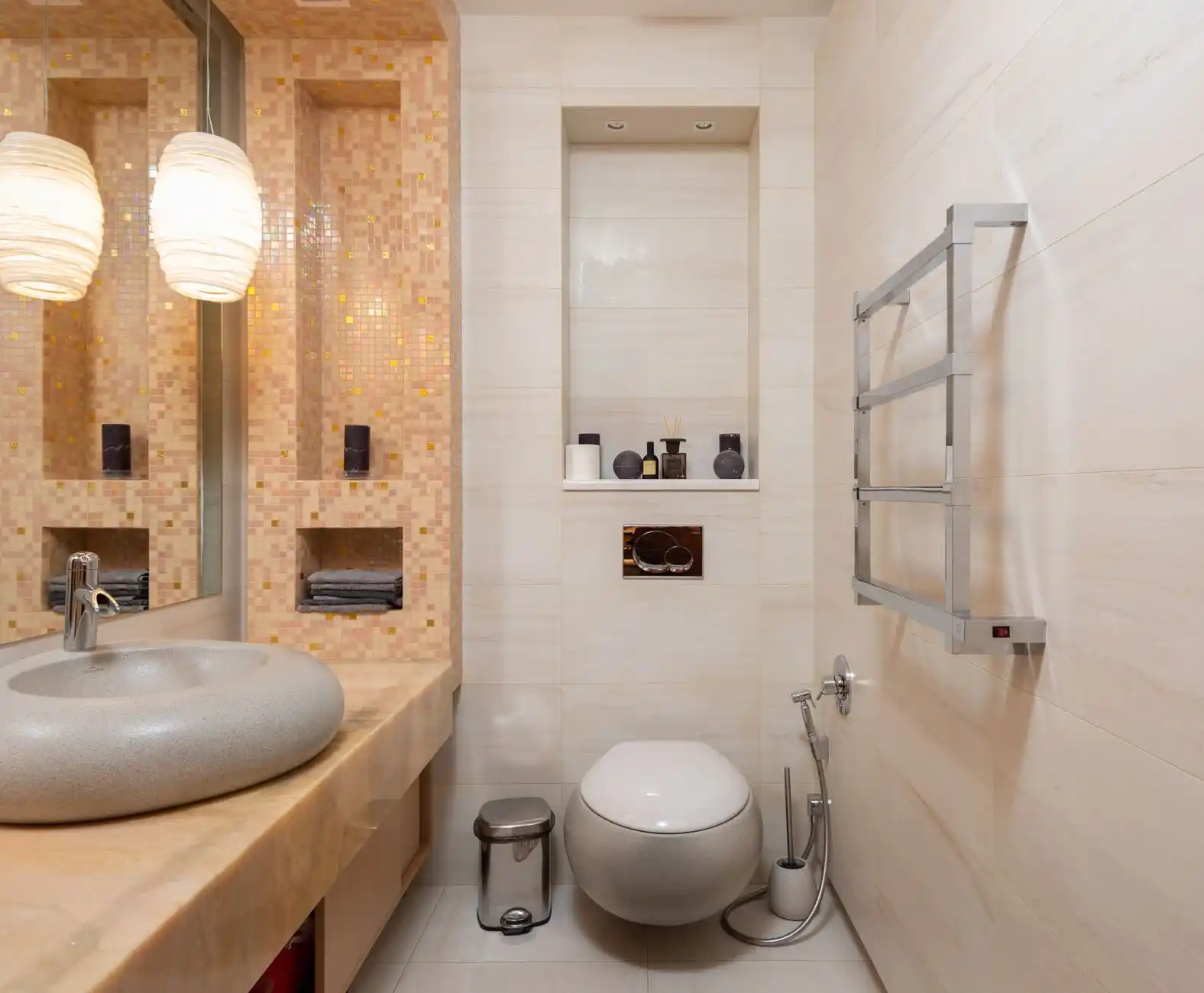
A wall-hung toilet and a floating vanity show more floor beneath them, which makes the room read as larger. They are also easier to clean around. A wall-hung toilet needs a concealed cistern in a stud wall or a boxed-in frame, which can double as a shelf.
A pocket or sliding door
A hinged door that swings into a small bathroom takes up a surprising amount of floor. A pocket door that slides into the wall, or a barn-style sliding door if the wall cannot be opened, frees that space for a larger vanity or shower.
A curbless walk-in shower
Replacing a bath or a framed enclosure with a level-access shower lets the floor run continuously, which instantly makes the room feel bigger. A single fixed glass panel is usually enough to contain the water if the shower is at least 90 cm deep. Choose clear rather than frosted glass and minimal hardware. A linear drain along one wall allows large tiles to be laid with a single slope.
In very tight spaces, the whole room can become a wet room, with the shower area separated only by a glass screen. This needs careful waterproofing of the entire floor and lower walls.
Storage built into the walls
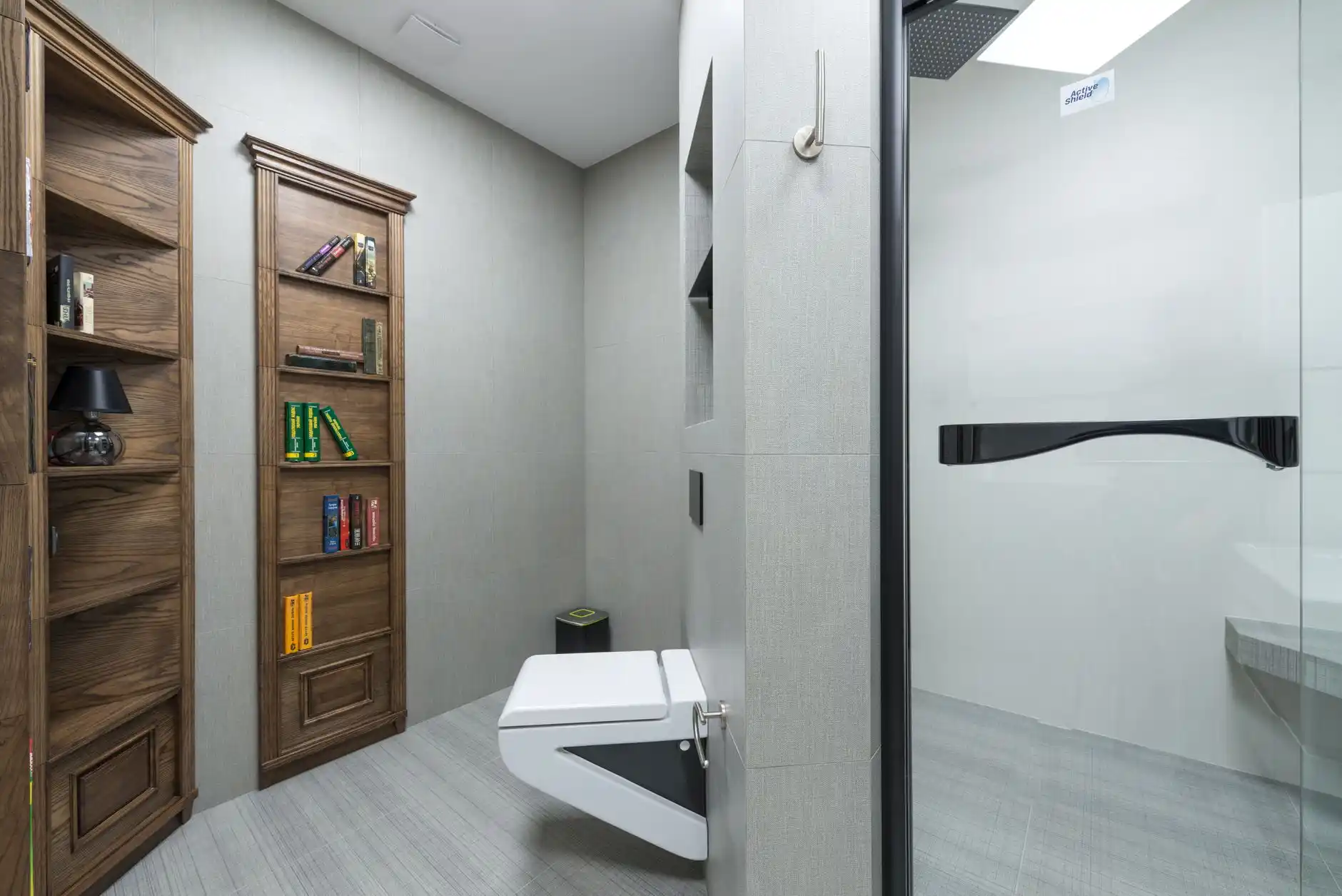
Projecting cabinets eat into space and make a small room feel crowded. Recess storage wherever the wall allows. A tiled niche in the shower holds bottles at a usable height. A mirror cabinet set into the wall above the basin gives storage without a bulky box. The space between studs behind the door can become shallow shelves.
A floating vanity with drawers stores more than one with doors, because nothing gets lost at the back. Use the full height of the room too: a narrow tall cabinet or open shelves above the toilet make use of space that is otherwise wasted.
Tile tricks for a bigger feel
Large-format tiles, such as 60 x 120 cm (24 x 48 in), mean fewer grout lines, so the surface reads as one calm plane. Using the same tile on the floor and walls softens the corners where one surface meets another. Matching grout to the tile colour helps further.
Laying tiles vertically on the walls draws the eye upwards and makes a low ceiling feel taller. Laying floor tiles on the diagonal or parallel to the longest wall can make a narrow room feel wider. If you want pattern, keep it to one surface, such as the shower wall or the floor, rather than everywhere.
Small mosaic tiles still have a place: on a sloped shower floor they give better grip underfoot.
Light and mirrors in a small bathroom
Light from a single ceiling fitting casts shadows on the face and makes a small room feel closed in. Combine an even ceiling light with light at face level on both sides of the mirror, or a backlit mirror. A soft strip of light under a floating vanity or in a shower niche adds depth and doubles as a night light.
Choose a warm white of around 2700 to 3000K for a relaxing feel, with good colour rendering so skin tones look natural. Bathroom fittings must be rated for the zone they sit in, so ask an electrician to confirm the position of each light.
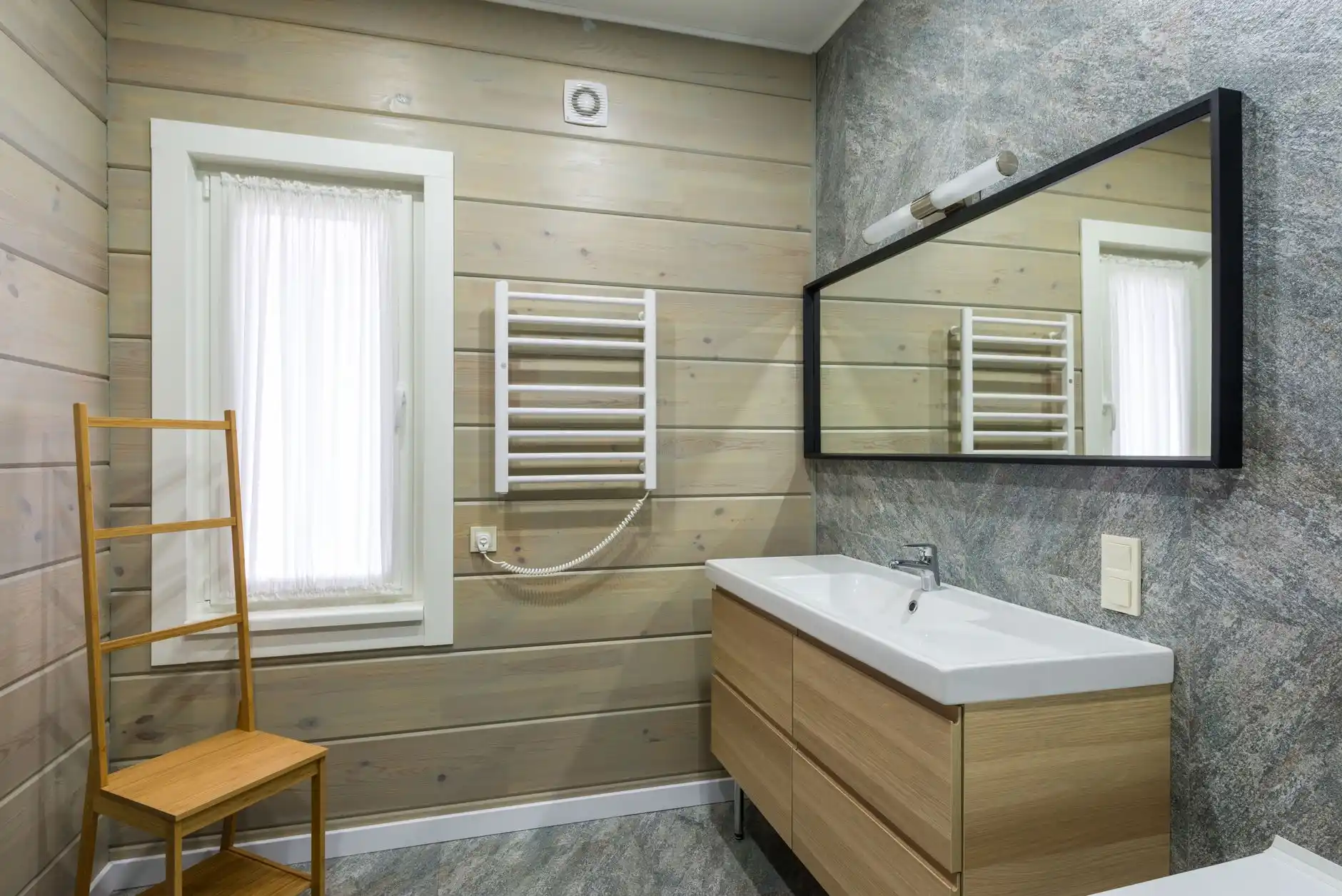
A mirror that runs the full width of the vanity, or even up to the ceiling, reflects light and space back into the room. If there is a window, place the mirror where it catches the daylight rather than facing a blank wall.
Colour and finishes
Light, warm neutrals and soft colours make small bathrooms feel airy, but a dark colour can work too: a deep green or charcoal in a small room can blur the corners and feel cocooning, as long as the lighting is good.
Keep the number of materials small, perhaps one tile, one timber or stone for the vanity top and one metal finish for taps and accessories. A restrained palette feels calmer and larger than a mix of finishes. For more on choosing materials that age well, see natural materials for a calm home.
Small bathroom mistakes to avoid
An oversized vanity that leaves no room to stand. A shower too small to turn around in. Too many tile types. Shelves crowded with products. A single downlight above the mirror. A door that hits the toilet. Poor ventilation, which leads to mould and damaged finishes; every bathroom needs an extractor fan sized for the room.
Most of these come from choosing products before planning the layout, which is why the plan always comes first.
Planning a bathroom that feels generous
A small bathroom is a technical project: plumbing, waterproofing, ventilation and electrics all have to fit within a few square metres. Drawing the room to scale and agreeing every position before work starts saves expensive changes later. For the general sequence of a project, see how to start an interior design project.
To see how calm materials and careful planning come together, browse the projects, or tell us about your bathroom.
FAQ
How can I make a small bathroom look bigger?
Show as much floor as possible with a wall-hung toilet and floating vanity, replace a bath or framed enclosure with a curbless shower and a single glass panel, use large tiles with matching grout, recess storage into the walls, and add a large mirror with even, shadow-free lighting.
How small can a bathroom with a shower be?
It depends on local codes, but a compact shower room with a toilet, basin and shower is possible in roughly 2.5 to 3 square metres (about 27 to 32 sq ft) if the layout is efficient. The shower itself should be at least 76 x 76 cm, and 90 x 90 cm or more is more comfortable.
Are large tiles good for a small bathroom?
Yes. Large-format tiles have fewer grout lines, so walls and floors look calmer and more continuous, which makes the room feel larger. Using the same tile on the floor and walls enhances the effect. On a sloped shower floor, smaller tiles or a textured finish give better grip.
Should a small bathroom have a bath or a shower?
In most small bathrooms, a walk-in shower makes better use of space and makes the room feel larger. A bath is worth keeping if it is the only one in the home and you have young children, or if resale in your area favours at least one bath.
What colour is best for a small bathroom?
Light, warm neutrals and soft colours make a small bathroom feel airy and bright. Darker colours can also work, especially in windowless rooms, because they blur corners and create a cocooning feel, but they need good, layered lighting to avoid feeling gloomy.