GUIDES
How to make a room look bigger
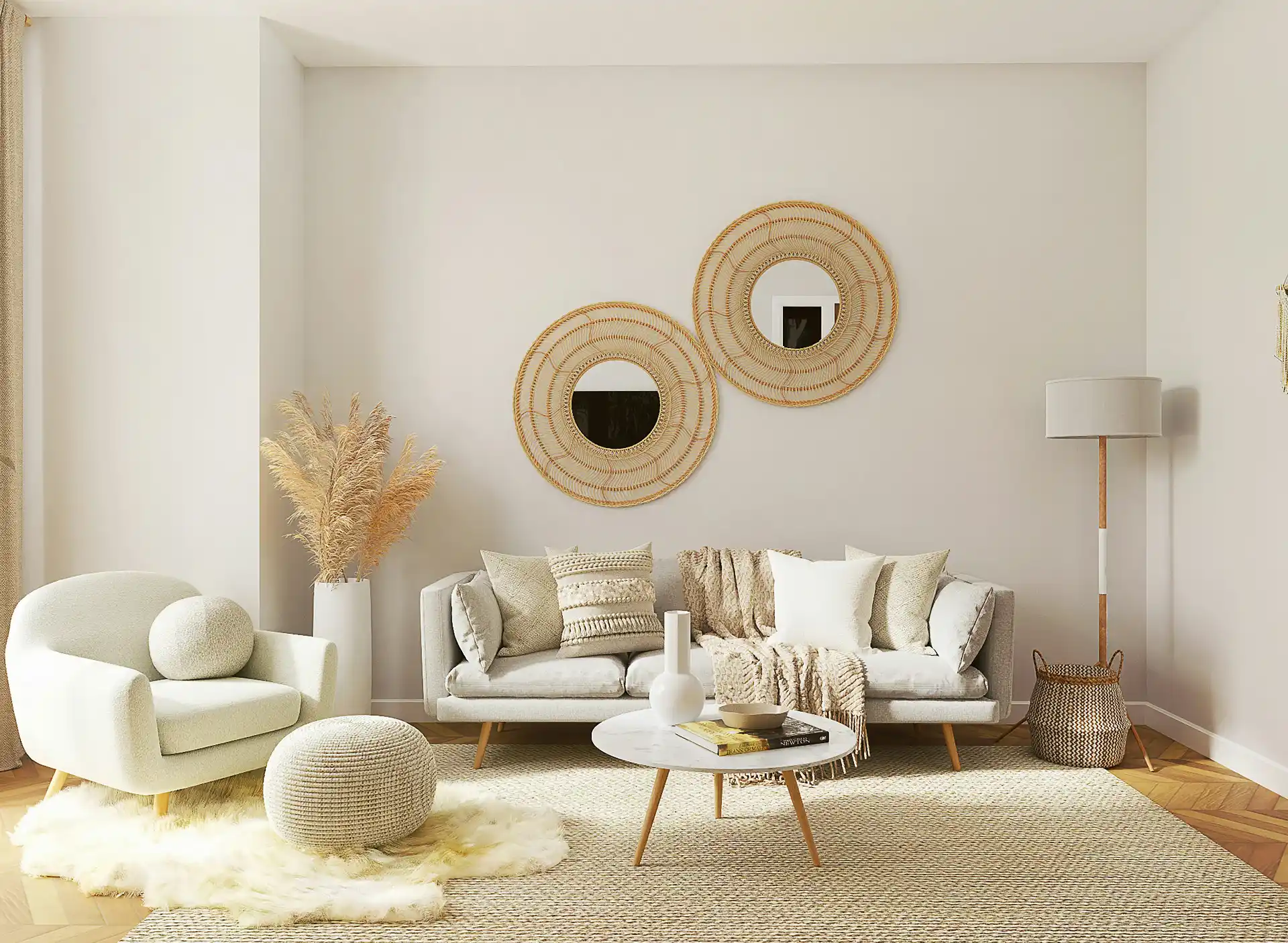
How to make a room look bigger without building work: clear sightlines, curtains hung high and wide, mirrors placed for light, fewer larger pieces and more.
You can make a room look bigger by opening the line of sight to the window, hanging curtains higher and wider than the window, blending walls, trim and ceiling in related tones, placing mirrors where they reflect light, choosing fewer but larger pieces, and lighting the walls and corners rather than only the centre.
None of these require knocking down walls. They work by changing what the eye reads first when you walk in: where it stops, how far it travels and how many edges it meets on the way. Below are eight changes designers use most, roughly in order of impact for the effort involved.
At a glance: clear sightlines; curtains near the ceiling and wide of the frame; tone-on-tone walls and trim; mirrors opposite or beside windows; fewer, larger pieces; vertical lines; light the edges; continuous flooring.
Clear the line of sight
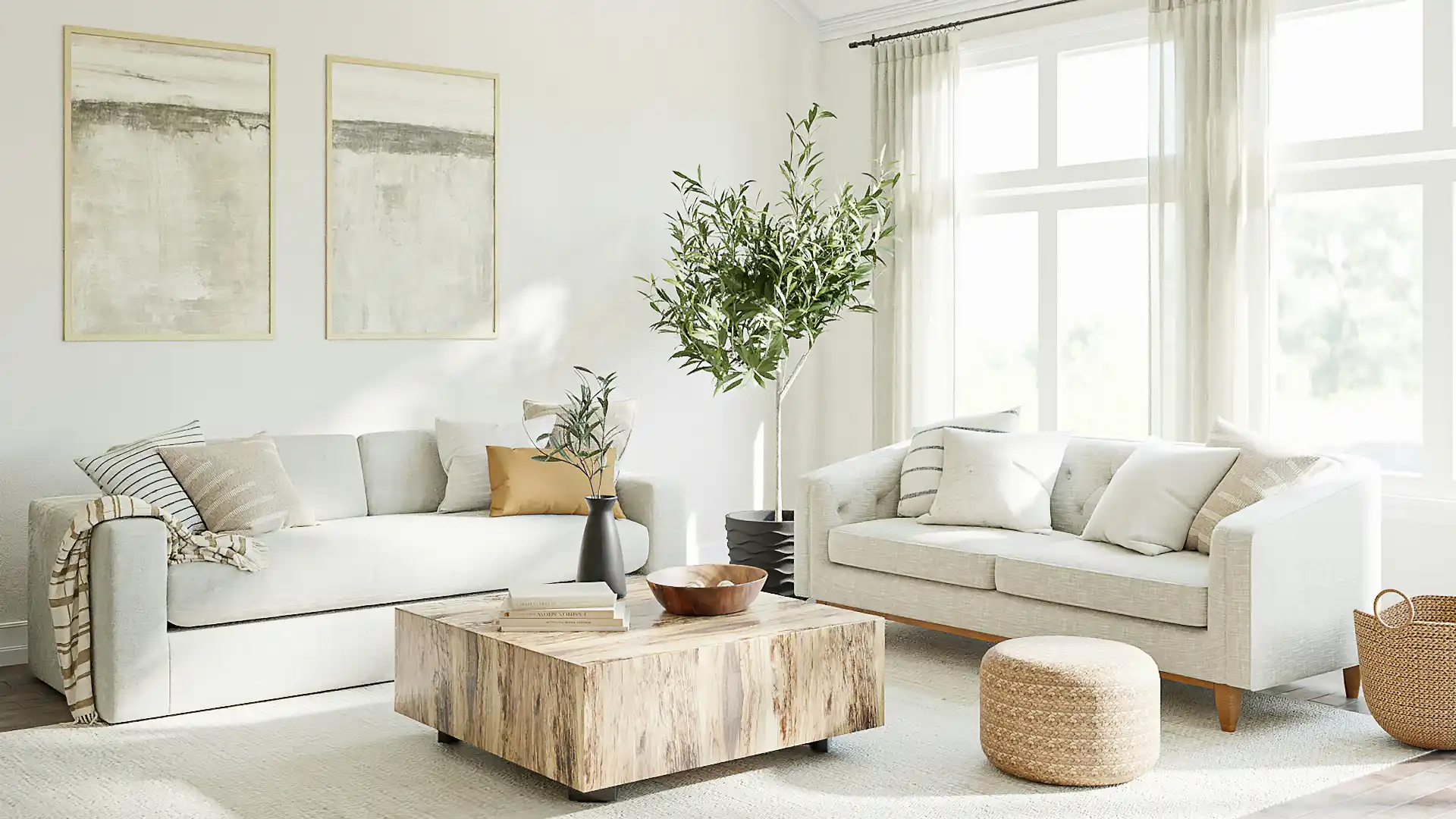
Stand in the doorway and look across the room. Whatever you see first sets the sense of size. If the view runs straight to a window or the far wall, the room feels generous. If it hits the back of a tall bookcase or a heap of chairs, the room feels cut in half.
Keep the route from the door to the window open, and move the tallest pieces to the walls beside the entrance rather than opposite it. Low furniture in the middle of the room, such as a sofa with a low back or an open-sided coffee table, lets the gaze travel further.
Hang curtains high and wide
Fixing the curtain pole close to the ceiling, rather than just above the window frame, makes the window look taller and the ceiling higher. Extend the pole 20 to 30 cm (8 to 12 in) beyond each side of the frame so the curtains stack against the wall when open. The window then appears wider, and the glass is fully exposed to let in daylight.
Curtains should brush the floor or break slightly onto it. Short curtains that stop at the sill chop the wall in half and make the room feel lower. Choose fabric close to the wall colour for a seamless look.
Blur the edges with tone-on-tone colour
Strong contrast between walls, skirting boards, door frames and ceiling draws attention to the edges of a room and makes its limits obvious. Painting trim and walls in the same colour, or in two close tones, makes those edges recede.
Taking the wall colour, or a slightly lighter version of it, onto the ceiling works especially well in rooms with low or sloping ceilings, because the eye cannot easily tell where the wall ends. Light colours reflect more daylight, but the principle works with mid and dark tones too: a room painted entirely in one deep colour can feel larger than a white room with dark furniture and trim breaking it up. For choosing the tones themselves, see how to choose a colour palette for your home.
Place mirrors where they reflect light
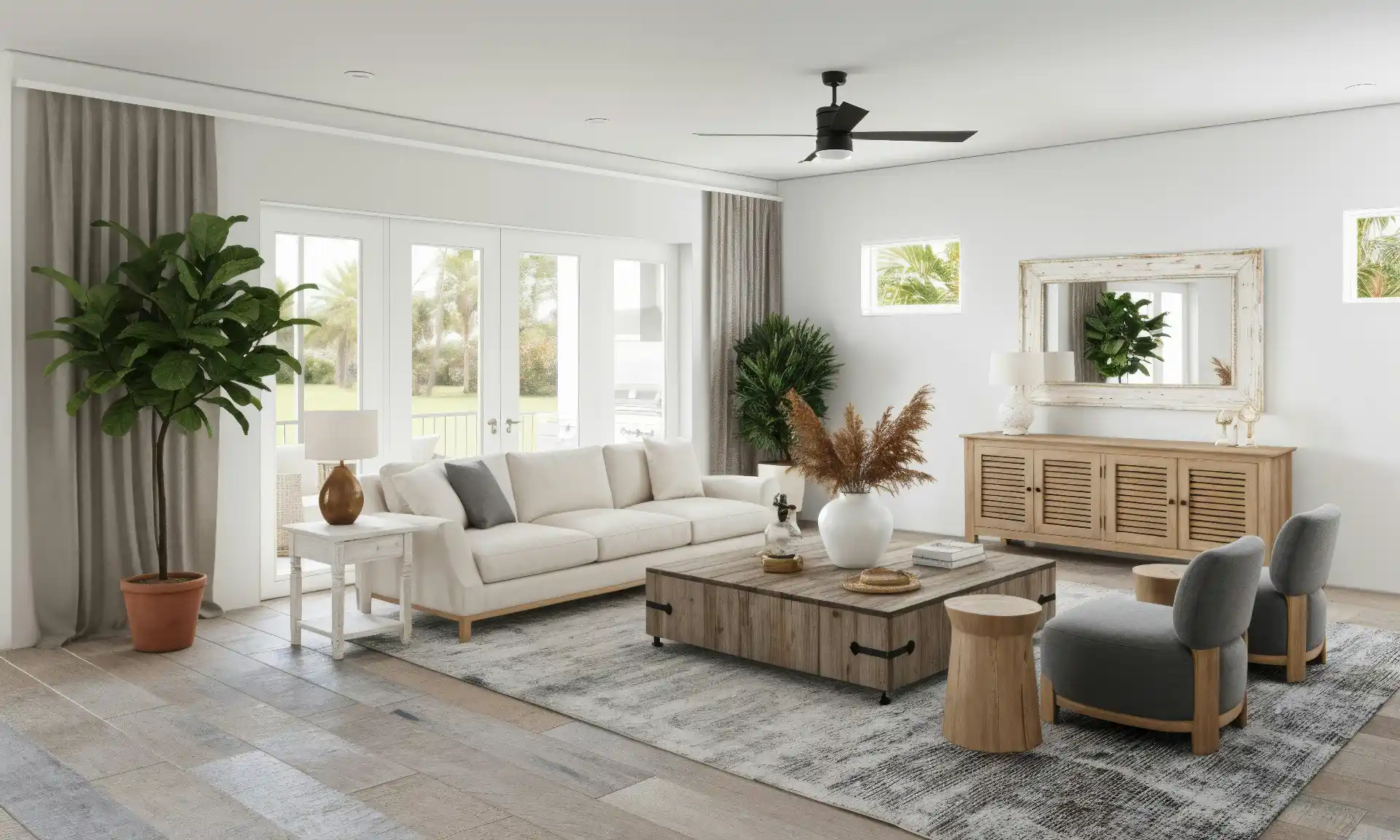
A mirror adds depth only when it reflects something worth seeing. Placed on a wall beside a window, it catches daylight and the view and spreads them through the room. Placed directly opposite a window, it doubles the light, though it can cause glare at certain times of day.
Large mirrors work better than several small ones. A floor-standing mirror leaning against a wall or a mirror that fills the space above a sideboard reads almost like another opening. Avoid placing a mirror where it reflects clutter, a blank wall or the back of the television.
Choose fewer, larger pieces
Many small pieces of furniture make a room look busy and smaller, because the eye registers each one separately. A single generous sofa often looks better than a small sofa with two small chairs. One large rug that reaches under the furniture makes the floor look bigger than a small rug floating at the centre, as explained in the rug size guide.
The same applies to art: one large canvas creates more calm than a scatter of small frames. Clear surfaces, closed storage and a short list of objects on display reinforce the effect.
Draw the eye upward
Vertical lines suggest height. Tall bookcases or joinery that reaches the ceiling, vertical panelling, a tall plant in a corner or a floor lamp that rises above the sofa all lift the eye. Art can be hung a little higher than usual in a room with low ceilings, as long as it still relates to the furniture below.
Equally, avoid strong horizontal lines at mid height, such as a dado rail in a contrasting colour, which slice the wall and make the ceiling feel lower.
Light the edges of the room
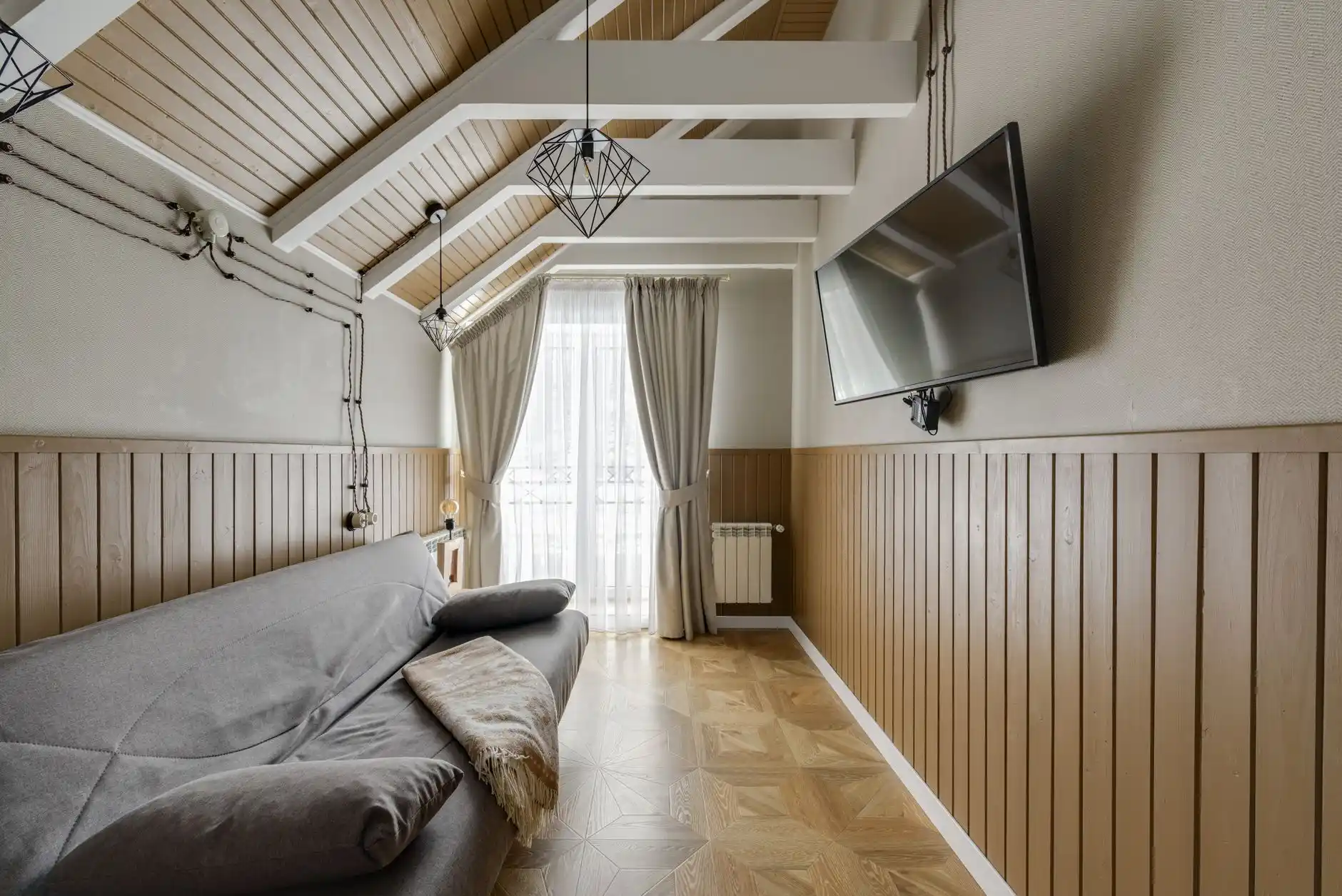
A room lit only from a central ceiling fitting has bright middles and dark corners, and dark corners make walls feel closer. Washing the walls with light, from wall lights, uplighters or concealed strips along a shelf, pushes them visually outward.
Place a lamp in each dark corner and light the far wall, so the eye is drawn to the farthest point. A pendant hung low over a table, by contrast, tightens the space around it, which is useful for dining but works against the sense of size elsewhere. More on combining light sources is in how to layer light in a living room.
Keep the flooring continuous
Changes of flooring between rooms, or within an open-plan space, mark boundaries and break the floor into smaller areas. Using the same floor through connected rooms makes each one feel part of a larger whole. Wide boards or large tiles, laid along the longest dimension of the room, stretch it further.
Thresholds help too: where possible, keep them flush, and choose door frames and doors in the wall colour so openings do not interrupt the flow.
See the effect in a finished room
These changes work best together: a clear view, light reaching the edges, few and well-chosen pieces, and colours that let walls recede. The open-plan interior of City quiet shows how glazing, continuous surfaces and restrained furniture make a space feel larger than its footprint.
If you are planning a redesign and want every room to feel more spacious, write to us.
FAQ
What colour makes a room look bigger?
Light, warm colours reflect more daylight and generally make a room feel larger. But the key is low contrast: painting walls, trim and even the ceiling in the same or similar tones blurs the edges of the room. A single deep colour used throughout can also make a room feel bigger than a white room with dark accents.
Where should a mirror go to make a room look bigger?
Place a large mirror on a wall next to a window, where it reflects daylight and the view, or opposite a window if glare is not a problem. Avoid hanging it where it reflects clutter or a blank wall. One large mirror creates more sense of depth than several small ones.
Do curtains make a room look smaller?
Curtains hung just above the window and stopping at the sill can make a room look smaller. Hung close to the ceiling, extended beyond the window frame and falling to the floor, they make windows look larger and ceilings higher, so the room feels more spacious.
Does dark furniture make a room look smaller?
Large, dark, heavy pieces can make a room feel smaller, especially against light walls, because they draw attention and create strong contrast. Dark furniture works better when it is lower, more open in form, or set against walls of a similar depth of colour.
How can I make a room with low ceilings feel taller?
Paint the ceiling in the wall colour or a slightly lighter version, hang curtains close to the ceiling, use tall bookcases or vertical panelling, choose low furniture to increase the space above it, and light the walls and ceiling with uplighters rather than relying on one central fitting.